Lightning and Golf: How to Stay Safe on the Course
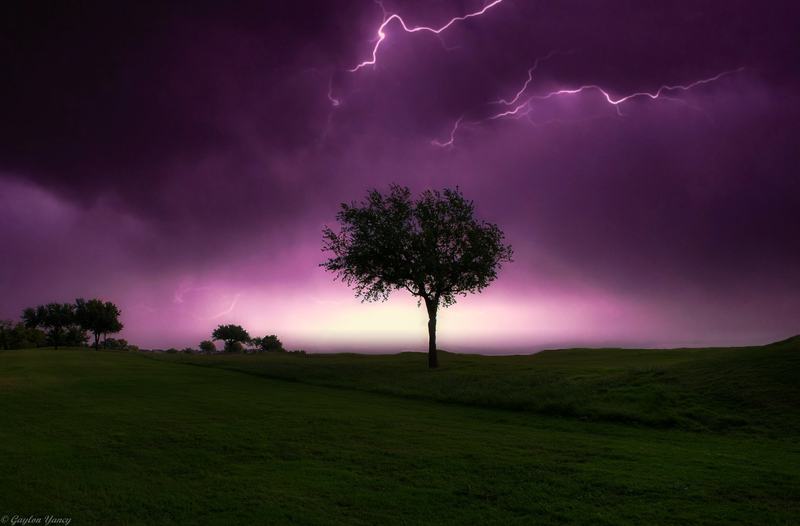
A golf course is one of the most exposed places to be in a thunderstorm. What the National Weather Service advises, what the Rules of Golf allow, what the course sirens mean, and how to plan tee times around storms.
Few places are as exposed to lightning as a golf course: wide open grass, isolated trees, and players standing out in the open, often a long way from the clubhouse. Lightning deaths on golf courses are rare, but they do happen, and the lessons from them are consistent. This guide covers what the experts advise, what the rules allow and how to plan your round when storms are around, which in Arizona means most summer afternoons during the monsoon.
The Risk in Numbers
According to the National Weather Service, lightning kills about 20 people a year in the United States. The National Lightning Safety Council's records list 16 golfers killed by lightning from 2006 through 2025, one of them in Tucson, Arizona. Almost all of them died in June, July, August or September.
The same records show a clear pattern: 7 of those 16 golfers were under or near a tree, or in an unsafe shelter, when they were struck. The National Weather Service calls sheltering under a tree the second leading cause of lightning casualties.
What the Experts Advise
The National Weather Service's message is simple: "When thunder roars, go indoors."
- If you can hear thunder, you are within striking distance. Lightning often strikes more than three miles from the center of a storm, outside the area where it is raining. Don't wait for the rain to start.
- Go to a safe place. The only safe places are a substantial building, such as the clubhouse, or a hard-topped, fully enclosed vehicle. Rain shelters, small sheds and open vehicles are not safe, and a golf cart is an open vehicle.
- Stay away from trees. Never shelter under a tree, especially an isolated one.
- Wait 30 minutes. Don't go back out until 30 minutes after the last thunder or lightning.
Myths Worth Forgetting
- "My clubs attract lightning." According to the National Weather Service, metal makes no difference to where lightning strikes; height, a pointed shape and isolation do. Dropping your clubs doesn't make you safe. Getting indoors does.
- "It isn't raining yet, so I'm fine." Lightning can strike miles ahead of the rain.
- "I'll crouch down." Crouching doesn't make you safe outdoors. The advice is to get to a building or a hard-topped vehicle.
What the Rules of Golf Say
The Rules of Golf treat lightning as a special case:
- You can stop on your own. Under Rule 5.7a, a player may stop play if they reasonably believe there is danger from lightning, without penalty. It is the one situation in which you don't need anyone's permission to walk off.
- An immediate suspension means stop now. Under Rule 5.7b, when the committee suspends play because of danger, players must stop at once and not play another stroke.
Many courses and tournaments use siren or horn signals recommended by the R&A and the USGA:
- One prolonged note: immediate suspension for a dangerous situation, usually lightning. Stop at once and head for shelter.
- Three consecutive notes: a normal suspension, for example for darkness or an unplayable course. You may finish the hole you are playing.
- Two short notes, repeated: play resumes.
Signals can vary from course to course, so check the scorecard or ask in the pro shop.
Planning Around Storms
In Arizona, the monsoon runs from June 15 to September 30, and storms usually build in the afternoon and evening. In summer, a morning tee time is the safest choice, as well as the coolest.
Our course pages help you plan. Each tee time's playability score accounts for the chance of thunder, and when thunderstorms are possible during any tee time, the page shows a lightning risk warning. No forecast can tell you exactly where lightning will strike, so on the course, the rule always comes first: if you hear thunder or see lightning, stop play and get to shelter. Check the forecast for your course on our Arizona and Nevada golf weather pages, and read about this year's storms in Arizona's 2026 Monsoon Ends With a Stormy Finish.
Sources: National Weather Service, lightning safety and lightning myths; National Lightning Safety Council, golfing lightning fatalities 2006–2025; Rules of Golf, Rule 5.
Photo: "Living on a Golf Course", by G. Lamar, licensed under CC BY 2.0, via Wikimedia Commons.
_-_Flickr_-_G._Lamar.jpg)